
Dreams of homeownership in Brazil very much alive

Real estate prices have been on the rise, yet that has not deterred Brazilians from becoming homeowners. However, this market is being reshaped by the demand of a new generation.
For many Brazilians, homeownership has been equated to stability, security, and personal achievement for the longest time, and this concept has been passed on to the newer generation. Although buying houses or land was previously seen as a good investment, recent years suggest otherwise.
Despite this, a real estate research organisation conducted a survey of more than 2,000 people on homeownership. The response was that 49 per cent intended to purchase a home, the highest rate in 12 months despite high interest rates and growing household debt. This shows that property demand in Brazil will continue to grow, with most people intending to purchase a home within the next two years. One could say that the memory of the 1990 hyperinflation coupled with Plano Collor, the government’s initiative to curb said hyperinflation, may be the main drivers of this sustained conviction.
Different generation, same dream
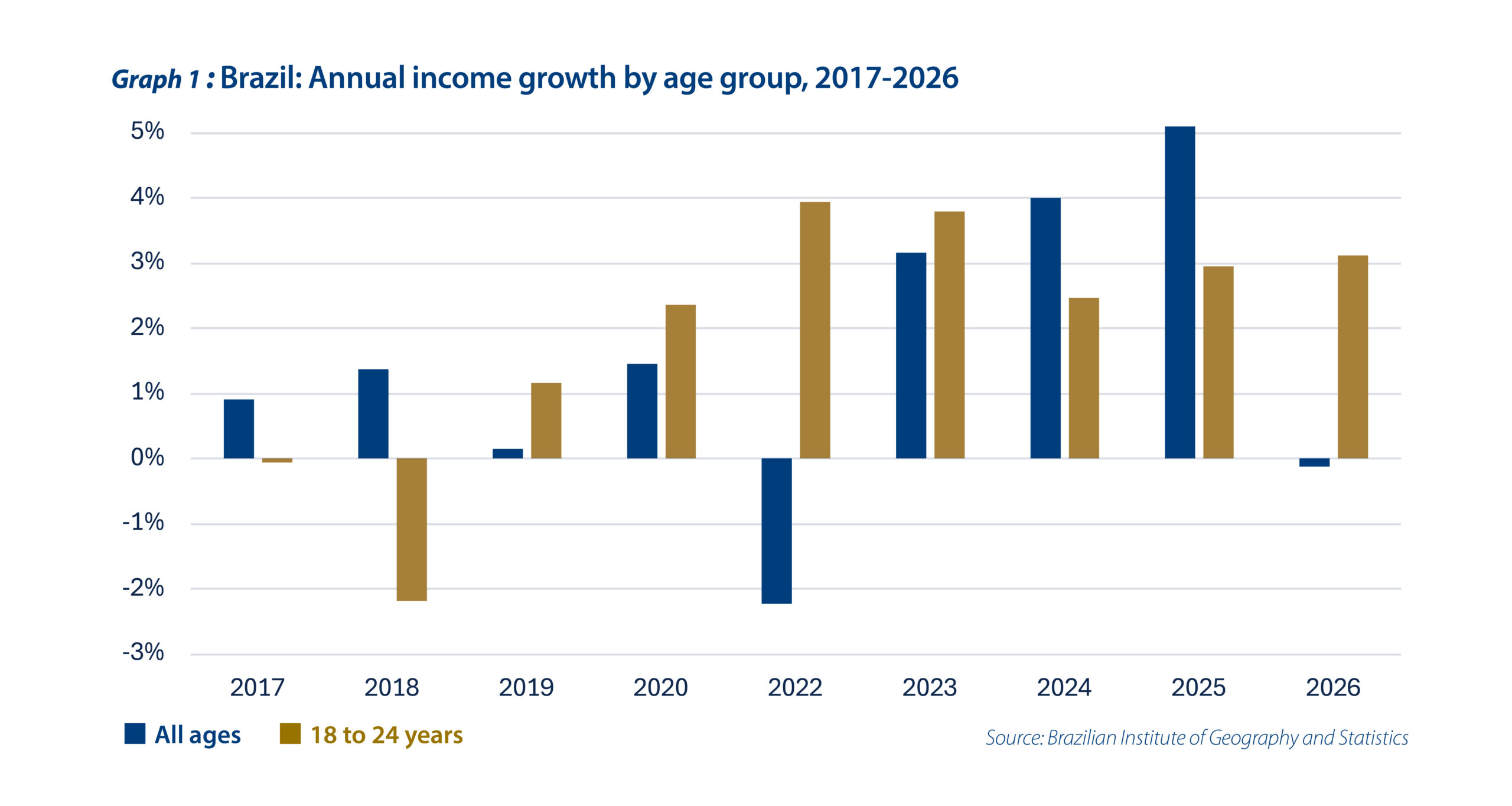
In particular, Gen Z participants or those between 21 and 28 years old lead in purchase intention, comprising 59 per cent. Though this cohort may seem to be keen on becoming more independent by becoming homeowners, this also reflects the improvement in annual income in the last few years. As seen in Graph 1, there are indications that Gen Z incomes have been growing at a faster pace than those of other generations for the past seven years.
As such, the Brazilian real estate market must adapt itself to cater to the needs and wants of this new generation of property buyers. Modern housing projects have been leaning towards potential buyer interest such as experience and convenience in the form of offering gyms, mini-markets, and shared offices within the property. Sustainability has also become more pivotal in decisions within the construction industry, pressuring the sector to incorporate solutions aligned with environmental, social, and governance responsibility agendas. With gradual cuts in the Selic rate and housing subsidies under the Minha Casa, Minha Vida (MCMV) program underway to reinforce growth in the construction sector for the next few quarters, this may be an opportunity for moderate to risk-seeking investors to build on.
Building more homes
Launched in 2009, the MCMV program is the biggest housing program in Brazil, with more than 6 million homes delivered. To regain momentum, the federal government reformulated the rules of the program to raise the ceiling of average family incomes and expand eligibility to more households. Given the optimism of families looking to purchase real estate, the program is expected to boost the domestic construction sector.
In addition to the easing of the eligibility requirements, the MCMV program introduced new features in 2025, such as an increase in the property value ceiling to BRL 500,000 (USD 99,200), larger subsidies, lower interest rates, and an extension of the financing term. These measures aim to hit two birds with one stone: expanding the access of middle-income families to decent housing while regaining political support approaching the upcoming presidential election. Thanks to the new features and even with a higher maximum price set for properties under financing, some studies show that it could increase a household’s purchasing power by 19 per cent.
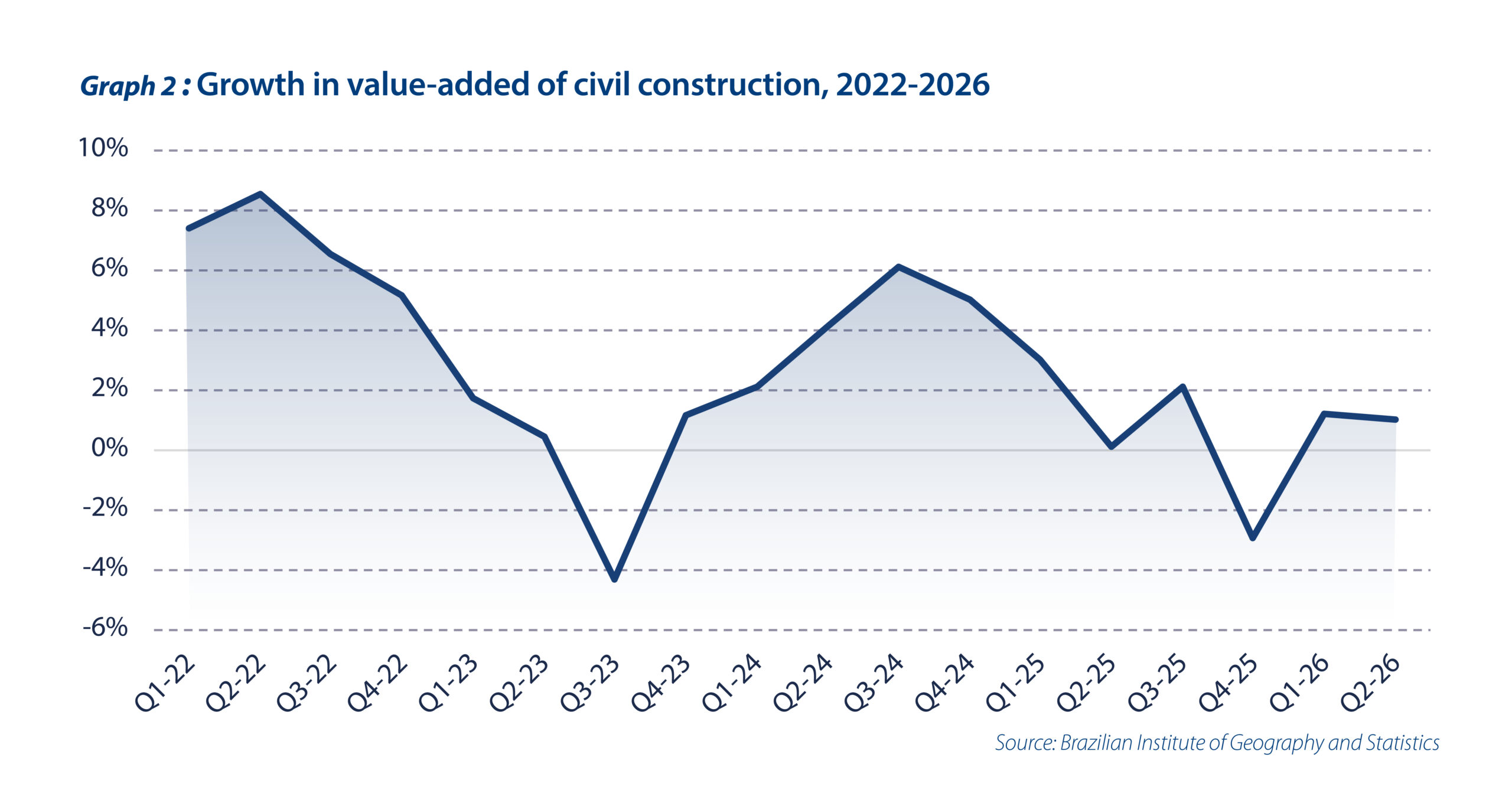
As shown in Graph 2, the construction sector has the potential to maintain a positive rhythm this year. According to the Brazilian Institute of Geography and Statistics, the first quarter of this year saw the construction sector grow by 1 per cent compared to the second quarter of 2025. It also accumulated a 1.1 per cent increase in the first half of 2026 compared to the same period of the previous year. The start of gradual cuts in the Selic rate reinforces the trend that favours the sector. Additionally, the progress on infrastructure projects in the last two years helps to sustain the positive outlook for the sector.
Construction companies are betting on sustainable growth this year. Real Estate Investment Funds are also gaining prominence, offering stable returns and portfolio diversification even in a challenging macroeconomic scenario. Companies with more exposure to low-income consumers also tend to benefit from the new MCMV rules.
To protect from the turbulent macroeconomic scenario forecasted ahead, instruments such as Agribusiness Receivables Certificates, Real Estate Receivables Certificates, and Financial Bills continue to offer moderate returns in a scenario full of volatility. However, banks and high-investment sectors can stand to gain more from the interest rate cut cycle. The ability of property developers to respond to the demands of their new generation of buyers will allow for faster growth in construction and home sales, which will catalyse stronger growth for the Brazilian economy when done right.
This original article has been produced in-house for Lundgreen’s Investor Insights by on-the-ground contributors of the region. The insight provided is informed with accurate data from reliable sources and has gone through various processes to ensure that the information upholds the integrity and values of the Lundgreen’s brand.